
AI's biggest risk is not hallucinations. It is bad management.
AI's biggest risk is not only hallucination, but using it like an answer machine instead of managing the work it does.
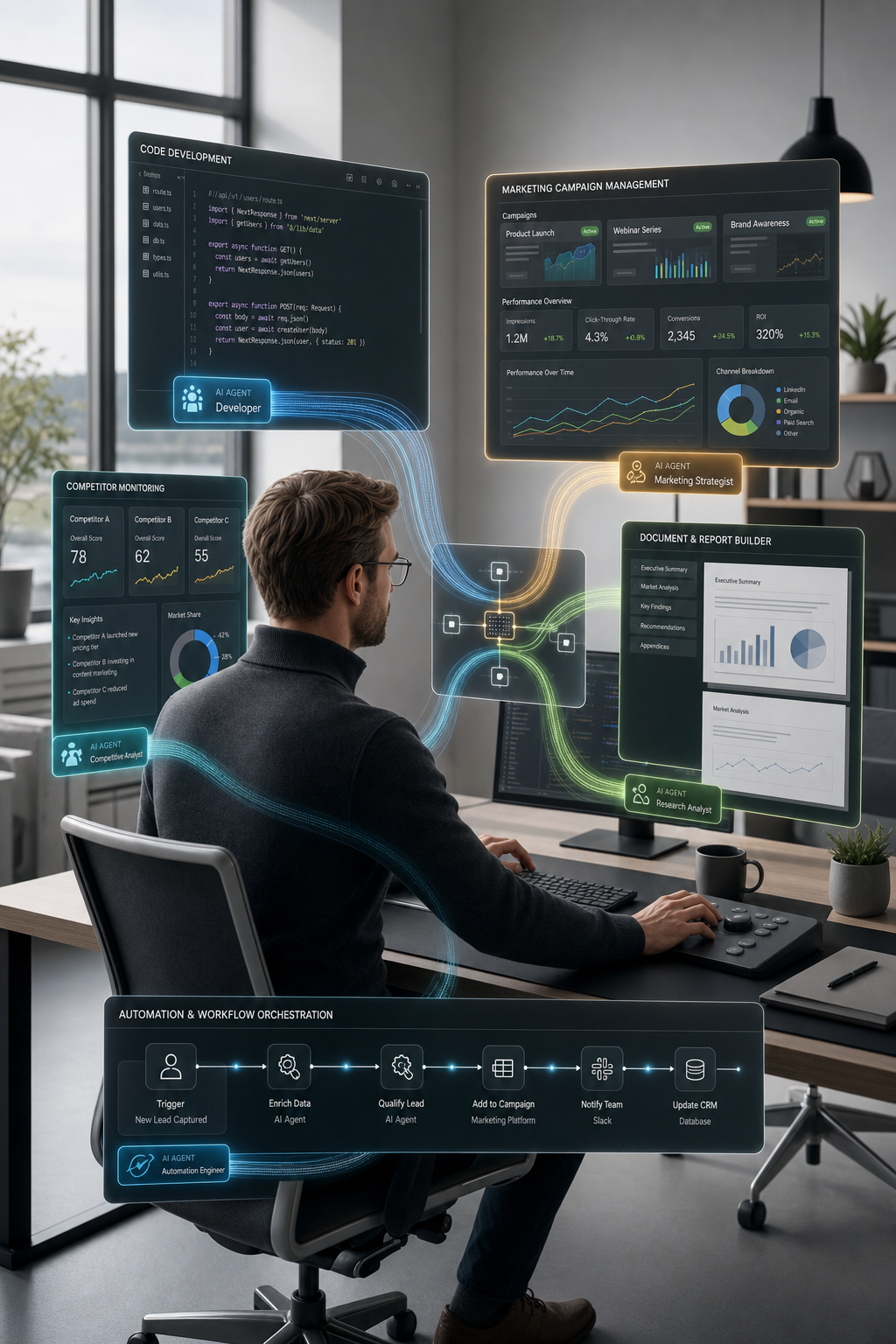
If AI is asked directly for "the right answer", problems start quickly: fluent text feels reliable even when the foundation is weak. That does not only tell us something about AI's limits. It tells us how poorly we have learned to manage the work AI does.
HS Visio, the business section of Helsingin Sanomat, recently covered AI mainly through risks: hallucinations, misleading fluency, confirmation bias, automation bias and the erosion of thinking. Cognitive science docent Anna-Mari Wallenberg walks through five biases that can appear when the human mind meets the machine.
These are good and important points. Hallucination is real, and skill decay is a real risk if processes are outsourced without thinking. But the picture is incomplete if AI is seen only as an oracle-like chat service that is asked for individual answers. That is exactly the outdated way to use it.
If you simply ask for an answer, you often get text that sounds convincing. That does not mean the answer is true, sufficient or useful.
A better way is to give AI a task, boundaries and quality criteria:
- check the facts from sources
- state what is uncertain
- mark assumptions clearly
- leave out claims that cannot be verified
- look for counterarguments
- say directly when a conclusion does not survive scrutiny
Bad AI use is questioning.
Good AI use is managing the work.
This also shows up in the article's own observations. Automation bias hits hardest in the middle: not the skeptical beginner, and not the expert who can spot errors, but the average user who trusts smooth output too easily. The answer is not less AI. It is better workflows. Verification is built in, the human stays in control, and expertise is used to manage the machine rather than to be replaced by it.
That is the shift we see in real agent work. An AI agent is not just a prettier chat window. It can be given a defined goal, source requirements, tools, checkpoints and a concrete deliverable. It can search, compare, draft, test, flag uncertainty and package the result for human review. The useful unit is not a single answer. It is the whole workflow around the answer.
This does not remove responsibility from the human. Quite the opposite. It makes management more important. Someone must decide what the task is, what counts as good work, where the agent is allowed to act, which sources are acceptable and what must be reviewed before anything leaves the system.
The companies that get value from AI will not be the ones that blindly trust whatever a chatbot says. They will be the ones that learn to lead AI like work: with goals, constraints, review, iteration and accountability.
That is why the biggest AI risk is not hallucination by itself.
The bigger risk is that organisations adopt powerful tools without changing how they manage the work.